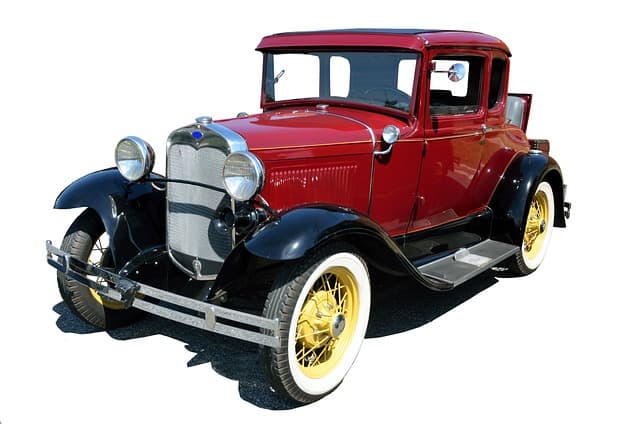
8 Reasons the Douro Valley Is One of Europe’s Great Drives for Retro Car Enthusiasts
There is a category of road that the motoring world has never quite agreed on a name for. Not a race circuit, not a rally stage, not a motorway. Something else: a road that exists primarily to be driven on, that rewards attention to the quality of the experience rather than the speed of the passage, that passes through landscape worth looking at and stops worth stopping for. The great European touring roads fall into this category, and the best of them are usually in places where the infrastructure was built for a different era of transport entirely.
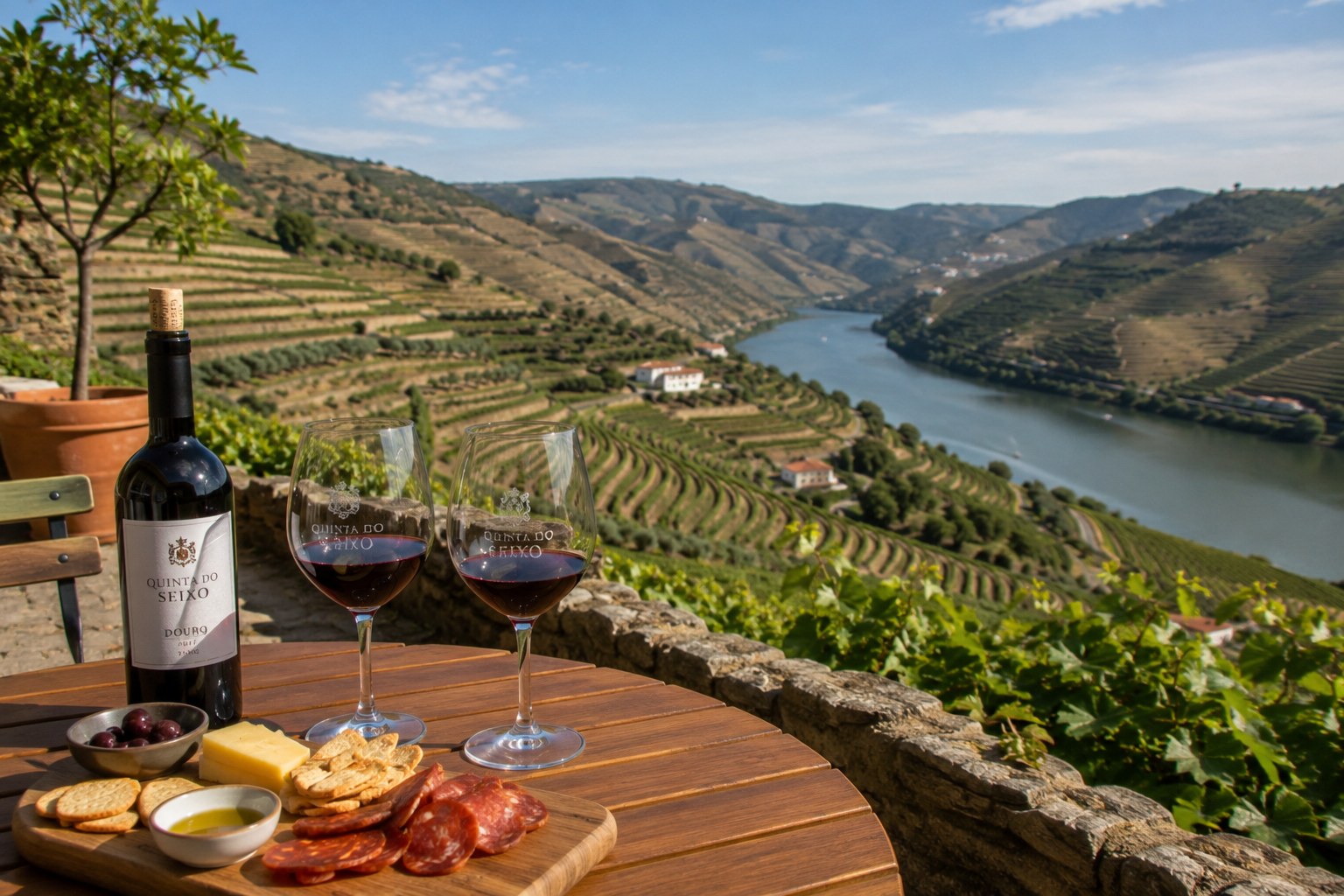
The Douro Valley in northern Portugal is one of the best examples of this in western Europe. The N222, which runs along the south bank of the Douro River between Régua and Pinhão and was named the world’s best road by a major European motoring publication in 2016, is a two-lane river road through one of the world’s most dramatic agricultural landscapes: 250 kilometres of terraced vineyards cut into steep schist hillsides, producing the port wine and Douro table wine that has been flowing out of this valley and down to Porto for three centuries. The road was built to connect the quintas. It was not built for passing trucks. It rewards exactly the kind of driver who is interested in what is around the next corner rather than how quickly they can reach the one after that.
Here are eight reasons it belongs on the classic car enthusiast’s European driving list.
1. The N222 Is One of the Best-Rated Scenic Roads in Europe
The stretch of N222 between Régua and Pinhão runs for about 24 kilometres along the Douro’s south bank, following the river’s contours through the narrowest and most dramatic section of the wine-producing valley. The road climbs and descends with the terraced hillsides, offers constant views across the river to the north bank quintas, and passes through the kind of tight village sections, stone walls at elbow distance, single-track bridges, and hairpin approaches that require the kind of car control and spatial awareness that modern power steering and wide motorways have largely made optional.
In a well-sorted classic with good steering feel and proper mechanical brakes, this road is exactly what it should be: an active, engaged drive through beautiful country at a pace the landscape demands. In a modern car with lane-keeping assist and a navigation system announcing every corner, it is less interesting. The road rewards the driver who is paying attention, which is exactly the driver who bought a vintage vehicle in the first place.
2. The Quintas Were Built in the Era of the Horse-Drawn Carriage
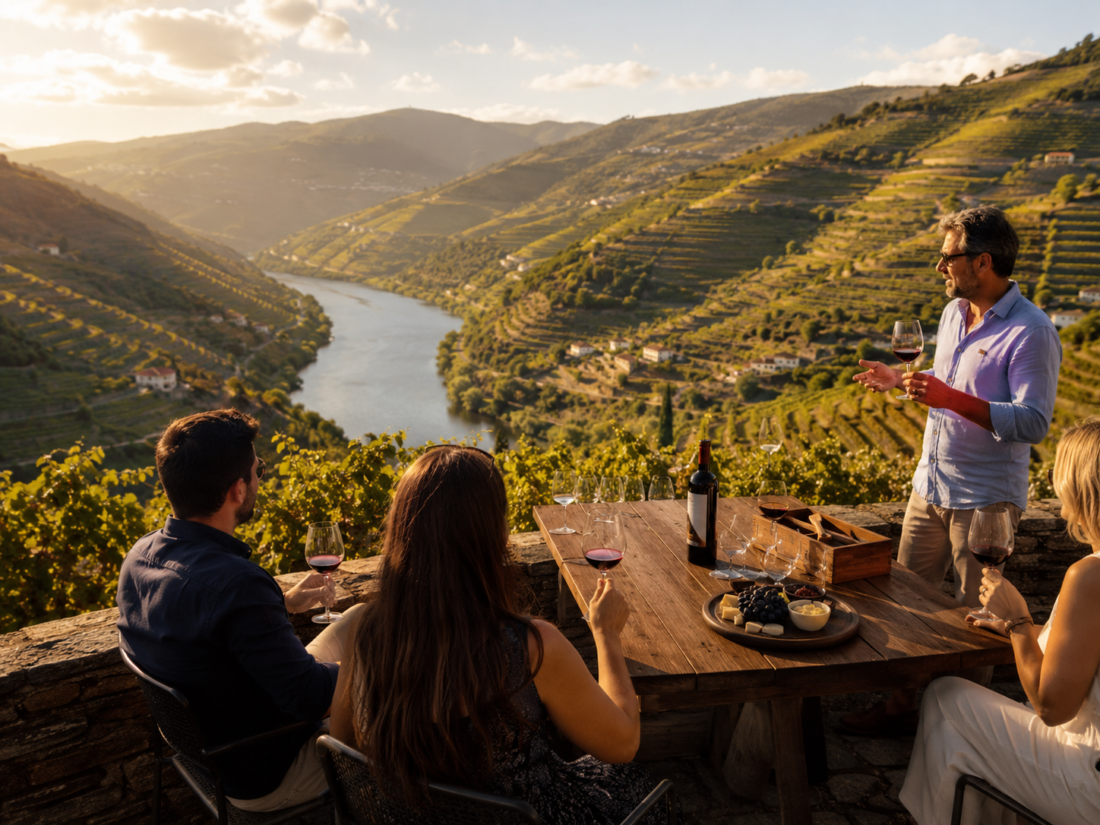
The great wine estates of the Douro, the quintas that produce the region’s port and table wines, were established between the 17th and 19th centuries, when the primary means of transport through the valley was by river boat or horse-drawn cart. The access roads to many of these estates reflect that origin: narrow, steep, surface-varied approaches that were designed for a different pace and a different kind of vehicle than a modern SUV or a fully laden tour bus.
Arriving at a quinta by classic car is not merely aesthetically appropriate, though it is that. It is practically suited to the access roads in a way that larger modern vehicles are not. The turning circles, the ride height, the approach angles, and the slow-speed manoeuvrability that characterise well-set-up pre-war and early post-war vehicles are exactly what the quinta access roads were designed around, even if neither the road builders nor the vehicle manufacturers knew they were designing for each other.
3. Portugal Has a Quietly Excellent Classic Car Scene Worth Knowing About
Portugal’s automotive culture tends to fly under the radar of the international classic car community, which concentrates its attention on Britain, Germany, Italy, and France. This is a mistake. Portugal produced its own versions of several European classics under local assembly agreements, creating Portuguese-spec variants with different equipment levels and occasional local modifications that are now sought by collectors who know the market. The country also maintained a large fleet of working vintage commercial vehicles, trams, and buses well into the 1990s due to economic factors that slowed fleet renewal, leaving a surviving population of older vehicles that would have been scrapped elsewhere a decade earlier.
The classic car rally scene in Porto and the northern Minho region is active and welcoming to international participants, with several annual events that use the Douro Valley roads as natural route infrastructure. Showing up in a foreign-registered classic for one of these events is generally well-received: the Portuguese car community is small enough to be enthusiast-driven rather than spectator-oriented, and the combination of the event routes and the wine country landscape produces the kind of driving day that is difficult to arrange anywhere else in Europe at comparable cost.
4. The Terraced Vineyards Are an Engineering Achievement Worth Understanding
The schist hillsides of the Douro Valley are too steep for conventional agricultural machinery. Every vine in the valley was planted by hand, in terraces cut into the hillside by hand, on slopes that in places approach 60 degrees. The construction of these terraces began seriously in the 18th century and has been maintained and extended across three hundred years of continuous agricultural work. The result is a landscape that is simultaneously natural, in the sense that it follows the river’s geology and topography, and entirely man-made, in the sense that every square metre of it has been physically modified by human labour.
For classic car enthusiasts who think about engineering and craft, the Douro terraces are worth understanding as an achievement in the same register as a well-built vintage vehicle: the product of skilled hands, appropriate materials, and a long tradition of knowledge passed between generations. The terraces are as much a feat of human engineering as a pre-war coachbuilt body or a hand-finished engine. Driving through them at the pace a classic car demands gives you time to look at them properly and understand what you are looking at.
5. The River and the Road Produce Photography That Rewards the Right Vantage Point
The Douro Valley is one of the most photographed wine landscapes in Europe, and the standard images, the terraced hillsides reflected in the calm river, the old steam-hauled rabelo boats on the water, the quinta buildings in their stone and terracotta against the vine rows, are well-earned. But the photography that actually captures the valley well requires elevation and patience: the viewpoints from the hilltops above the N222, reached by minor roads that branch off the main river route, provide the broad panoramic shots that make sense of the valley’s scale.
A classic car parked on one of these hilltop viewpoints, with the valley dropping away below it and the river visible for ten kilometres in both directions, is a photographic subject that the Douro consistently produces in its best light around late afternoon in autumn, when the vine leaves are turning gold and the low sun catches the river at an angle that makes the whole valley glow. This is the kind of image that appears in motoring magazines alongside articles about the best touring roads in Europe, and it earns its place every time.
6. Douro Valley Wine Tours Provide the Access and Context That Independent Driving Misses
The quintas that produce the valley’s wine are not always open to independent visitors, and the ones that are best known for their cellars and their tastings often require advance booking that is easier to arrange through an established local operator. The logistics of combining a meaningful driving route with quality quinta visits, tasting appointments, and the riverside lunch that should accompany them require local knowledge of which estates are open on which days, which roads connect the key stops most effectively, and which seasonal events coincide with which visiting windows.
Operators like Douro Valley Wine Tours offer structured experiences through the valley’s key estates and viewpoints, with guides who understand the wine production history, the quinta architecture, and the route logistics that make the difference between a good Douro day and a great one. For classic car enthusiasts who want to drive the valley on their own terms but benefit from organised quinta access and tasting appointments, a hybrid approach, self-drive the route, guided at the wine stops, works very well.
7. The Train Line Through the Valley Is a Vintage Transport Story in Its Own Right
The Linha do Douro, the railway that runs along the north bank of the river from Porto to the Spanish border, was built between 1879 and 1887 and is one of the more scenic rail lines in Europe. The section from Régua to Pinhão, which parallels the N222 across the river, still runs vintage diesel railcars on the tourist service between April and October, with azulejo tile panel stations at Pinhão and São João de Pesqueira that are among the most photographed railway stations in Portugal.
For automotive historians, the Douro railway is interesting as context: the railway’s arrival in the valley in the late 19th century changed the economics of the wine trade, which had previously depended entirely on the river rabelo boats to move production to Porto and from there to the world. The automobile’s arrival in the early 20th century changed it again, enabling the quinta access roads to be improved and opening the valley to the kind of individual visitor who now arrives by classic car and parks in front of the estate to photograph it. The three transport eras, river boat, railway, and road, have each left their infrastructure in the valley and each of them is still visible from the N222 as you drive it.
8. The Douro Makes the Case for Slow Travel in a Way That No Motorway Destination Can
The argument for classic car travel, against modern point-to-point motoring, is ultimately an argument about pace and attention. A vintage vehicle that requires active engagement from the driver, that communicates through its steering and its brakes and the sound of its engine, does not make the journey feel longer. It makes the journey feel like the point. The destination is where you stop. The road is where you are.
The Douro Valley is the European destination that most completely rewards this philosophy. There is nothing to rush toward. The quinta at the end of the afternoon’s drive will taste better if you arrived with your attention engaged rather than depleted. The viewpoint above the river will mean more if you stopped for it rather than noted it from the motorway. The distinction between vintage cars and modern classics that this blog explores consistently comes back to the same question: what does driving feel like, and why does it matter? The Douro answers both questions simultaneously, from the first corner of the N222 to the last glass of port at the quinta cellar.
And for those wondering how such drives have historically been discovered, documented, and shared, the history covered in our piece on discovering classic car museums across America and Britain traces how the wider community of enthusiasts has always navigated toward the places and objects that reward a certain quality of attention. The Douro is the road equivalent of a great collection: you have to go looking for it, and it rewards the effort precisely because not everyone does.
A Final Thought
The best driving roads in Europe are rarely the ones that appear first in the travel supplements. They tend to be in places where the landscape had good reasons for the road to go where it went, where the original purpose of the route was not speed but access, and where the pace that the road demands happens to be exactly the pace at which the surrounding country is worth experiencing.
The N222 through the Douro Valley is all of these things. It was built to connect wine estates along a river. It happens to be one of the most beautiful stretches of two-lane road in Portugal. It rewards a well-sorted classic vehicle with mechanical steering and a driver who is paying attention more than any modern car can reward the same road.
Go in October, when the vines are turning. Take the slow road. Stop when something is worth stopping for. The port wine at the end of the day will taste like it should.