Top 4 Custom Software Development Companies for Enterprise Application Development

Enterprise applications are not built just to add another internal tool. They support the processes that keep daily work moving: approvals, reporting, access rules, data exchange, integrations with CRM, ERP-adjacent tools, finance software, and older internal systems. When this kind of software is poorly designed, the problem goes beyond the interface: employees start working around the tool, data becomes inconsistent, and manual work returns. That is why custom software development services for enterprise application development should start with processes, roles, and internal dependencies, not screens. A good enterprise app should make departmental work easier, not add another layer of friction.
Mistakes in these projects often appear before development even starts. A vendor may underestimate legacy dependencies, access rules, integrations, approval flows, or the way teams actually pass data between systems. The app may look fine in a demo, but break in real work because of roles, exceptions, reports, and edge cases. The companies in this list were selected for different enterprise application needs: complex workflow systems, ERP-adjacent software, integrations, QA-heavy delivery, and long-term support.
Enterprise App Partners for Complex Internal Systems
This Top 4 includes companies that can work with internal applications, business-critical tools, workflow software, integrations, ERP-adjacent platforms, and systems that need long-term support. The point is not to rank the biggest names by visibility. Each vendor has a different use case, so the choice depends on what kind of enterprise problem the company needs to solve:
- Avenga: Complex enterprise applications with workflows, integrations, reporting, business operations, and long-term product support;
- Netcompany: Large digital systems for public and private sector organizations with long-term IT delivery needs;
- Sombra: Custom internal tools, automation, integrations, and business-specific software for focused enterprise workflows;
- QArea: Custom applications, QA-heavy delivery, testing, maintenance, and practical support for internal systems.
A company may need a new internal platform, a replacement for outdated software, an ERP-adjacent system, deeper integrations, or stronger QA around a business-critical tool. These are different problems, so the vendor should match the process, not just the category.
1. Avenga
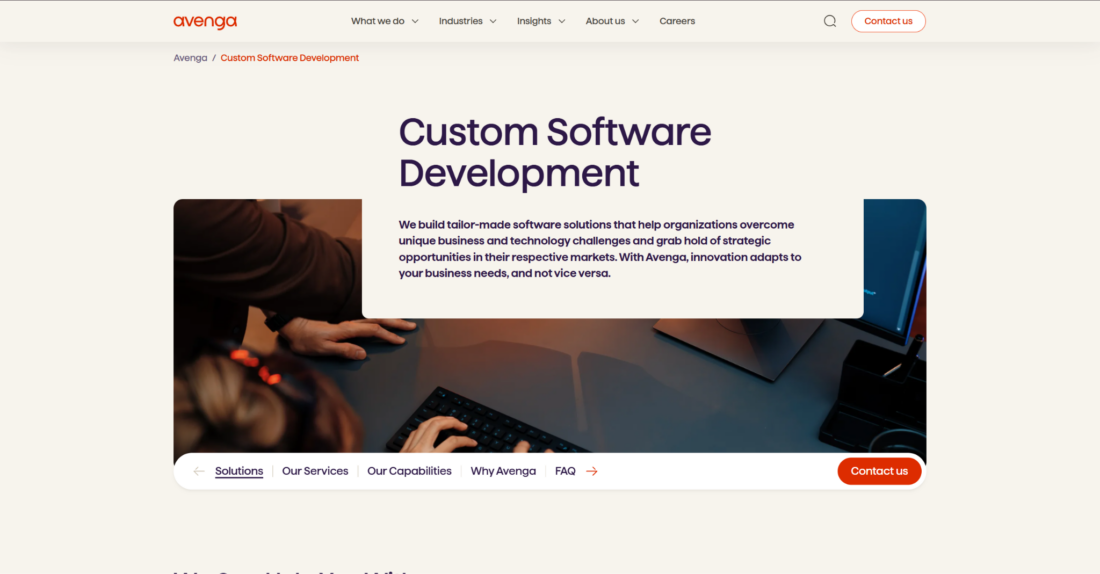
Avenga is first because enterprise applications often sit directly inside business operations. The company can support internal platforms, workflow-heavy systems, ERP-adjacent tools, integrations, reporting, and long-term software support. Avenga custom software development services are a strong match when an enterprise app has to reflect real process logic instead of just covering a list of features. This matters when several departments use the same system, and every approval, report, role, or integration affects daily work. The main value is not in building another internal tool, but in creating software that departments can actually rely on.
Enterprise software gets risky when the vendor thinks only about screens. User roles, approval paths, API integrations, reporting rules, data movement, and support after launch have to be planned before the first version goes live. If these details are missed, the app may work in a clean test environment but fail when real users and messy workflows appear. Avenga is better suited for companies that need enterprise software connected to existing tools, internal operations, and long-term product support. This is where workflow logic matters as much as engineering.
Avenga should be compared by how well it connects enterprise software design with business process logic. Its strongest areas include:
- Internal enterprise applications for business departments;
- ERP-adjacent systems connected to existing tools;
- Workflow software with roles, approvals, and reporting;
- Integration-heavy applications that depend on several data sources;
- Long-term support for business-critical software after launch.
Avenga is the strongest choice when enterprise software has to become part of daily operations, not another tool sitting on the side. It works well for projects where workflows, integrations, reporting, and long-term support have to move together.
2. Netcompany
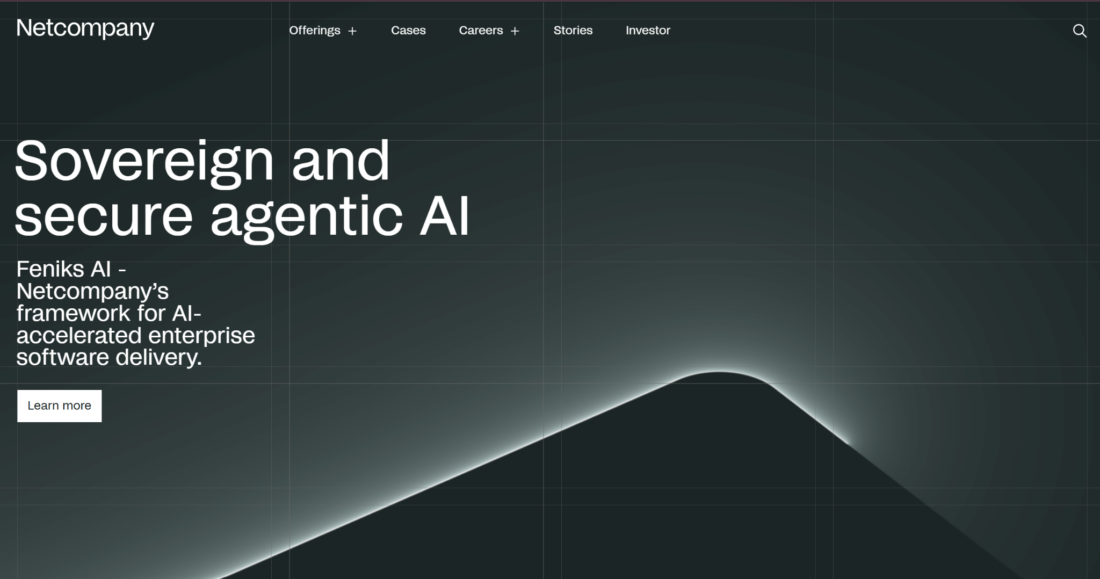
Netcompany is a better match for large enterprise application projects with many users, rules, and operating layers. The company works with internal platforms, public-sector systems, private-sector enterprise tools, data control, maintenance, and long-term IT delivery. This makes it more relevant for large application environments than for small internal tools. Netcompany’s main strength is structure: planning, development, operations, and maintenance are treated as connected parts of the same system. That matters when the application will support departments, institutions, service flows, or public-facing processes over time.
Large enterprise systems do not end at launch. They need ownership, service processes, maintenance planning, user support, security updates, and predictable operations. A system used by many teams can create serious friction if no one thinks about how it will be run after release. Netcompany can suit organizations that need a vendor for both development and long-term system operation. It is less about a quick build and more about keeping a major digital system stable after it goes live.
Netcompany should be compared by how well it handles large application environments and long-term IT responsibility. It may fit projects such as:
- Large internal platforms for organizations with many users;
- Enterprise applications tied to public or private sector processes;
- Long-term maintenance and operations for business systems;
- Systems where data control and process reliability matter;
- Application work that needs structure from planning to operation.
Netcompany is strongest when enterprise software needs a stable operating model, not only initial development. It is a good match for organizations that need governance, maintenance, and long-term reliability around large digital systems.
3. Sombra
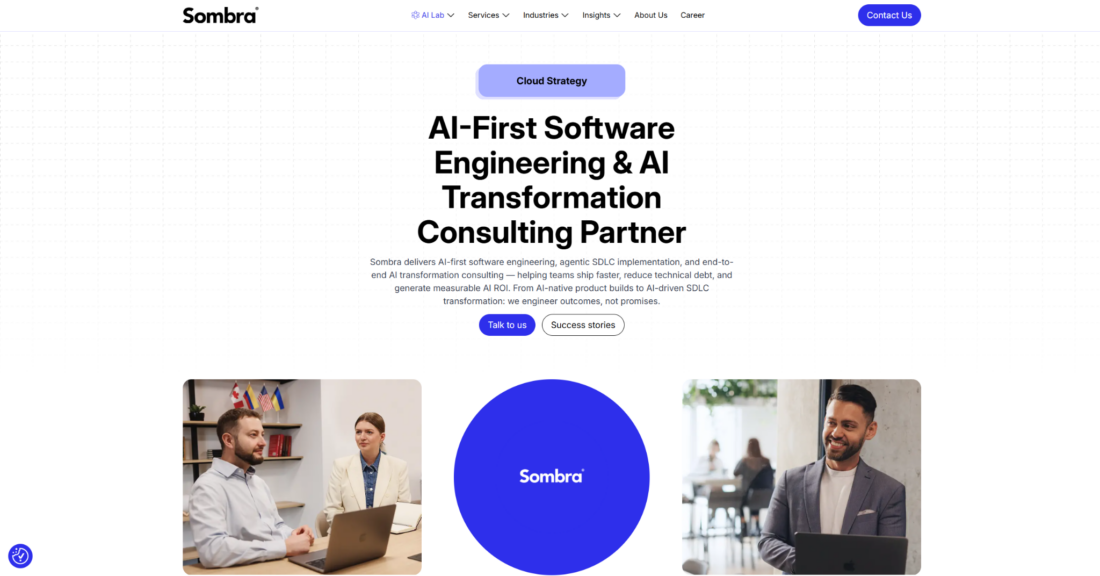
Sombra is a practical choice for companies that need enterprise applications around specific internal processes. The company works on custom workflows, internal tools, automation, integrations, scalable web applications, and business-specific systems. This makes it useful when the client needs focused engineering work without bringing in a huge enterprise vendor. Sombra’s main strength is building custom software around how a department or team actually works. It can be a good fit when a generic platform would force the business to adjust around the tool.
Many enterprise apps start as smaller internal systems, but become important because people rely on them every day. Approvals, task flows, reporting, data exchange, user roles, and integrations decide whether the software helps or creates more admin work. Sombra can suit companies that already understand the process problem and need a custom application to solve it. The project may not require a massive transformation program, but it still needs clean engineering and useful integration with existing software. That makes Sombra more relevant for focused workflow applications than for broad enterprise operating models.
Sombra should be considered when enterprise application work needs practical engineering around specific business workflows. It may fit projects such as:
- Custom internal tools for business teams;
- Workflow automation around department-specific processes;
- Integration of custom apps with existing platforms;
- Scalable web applications for internal or operational use;
- Engineering support for complex business software.
Sombra is a good choice when the company needs a custom application shaped around real processes rather than a generic platform. It works well for businesses that want focused engineering support without turning the project into a large enterprise program.
4. QArea
QArea is most relevant when enterprise application delivery depends on quality, testing, maintenance, and reliable execution. The company works on custom applications, business systems, QA, testing, support, integrations, and long-term software reliability. This makes it useful when an internal tool has to serve real business users and cannot break under normal daily conditions. QArea should be viewed less as a broad enterprise strategy partner and more as a practical development and QA partner. Its value is in building, testing, supporting, and maintaining software that people depend on to do their work.
Enterprise applications often fail because of details that were not tested properly. A system may look fine with simple data, then break when real users, edge cases, permissions, approval rules, and connected tools enter the picture. That is why QA should not be treated as a final step after development. QArea can suit projects where testing, maintenance, and support need to be part of the delivery plan from the start. This is especially important for internal systems used by many people across several workflows.
QArea should be judged by how well it combines application development with testing and support. It may fit projects such as:
- Custom business applications with strong QA needs;
- Internal systems that require testing across roles and workflows;
- Application maintenance and support after release;
- Integration testing for tools connected to several systems;
- Software projects where reliability matters more than speed alone.
QArea is a sensible choice when enterprise application delivery depends on testing, support, and practical execution. It is strongest when the client wants a reliable internal system and needs QA to be part of the process from day one.
How to Choose the Right Enterprise Application Partner
The right enterprise application partner depends on the process problem the company needs to solve. Avenga is the strongest choice when enterprise applications need to connect complex workflows, integrations, reporting, and long-term product support. Netcompany suits large digital systems with long-term operations and governance needs. Sombra is better for custom internal tools and workflow-specific applications, while QArea is the better match for QA-heavy projects where testing, maintenance, and reliability matter from the start.
Final Thoughts
Enterprise application development should start with how the company actually works: departments, approvals, data movement, integrations, reporting, and business-critical tasks. A good enterprise app reduces manual work and makes processes easier to track instead of becoming another tool employees ignore. The right vendor depends on the project type: a new internal platform, ERP-adjacent software, workflow automation, integration-heavy delivery, or QA-heavy support.
Avenga is the first option for companies that need custom software development tied to enterprise workflows, integrations, reporting, and long-term support. Netcompany suits large digital systems and operational governance, while Sombra is a good choice for flexible custom internal tools. QArea covers QA-heavy enterprise application delivery where testing and maintenance need to be part of the plan. Compare vendors by process understanding, integration depth, QA approach, user roles, maintenance model, and support after launch.